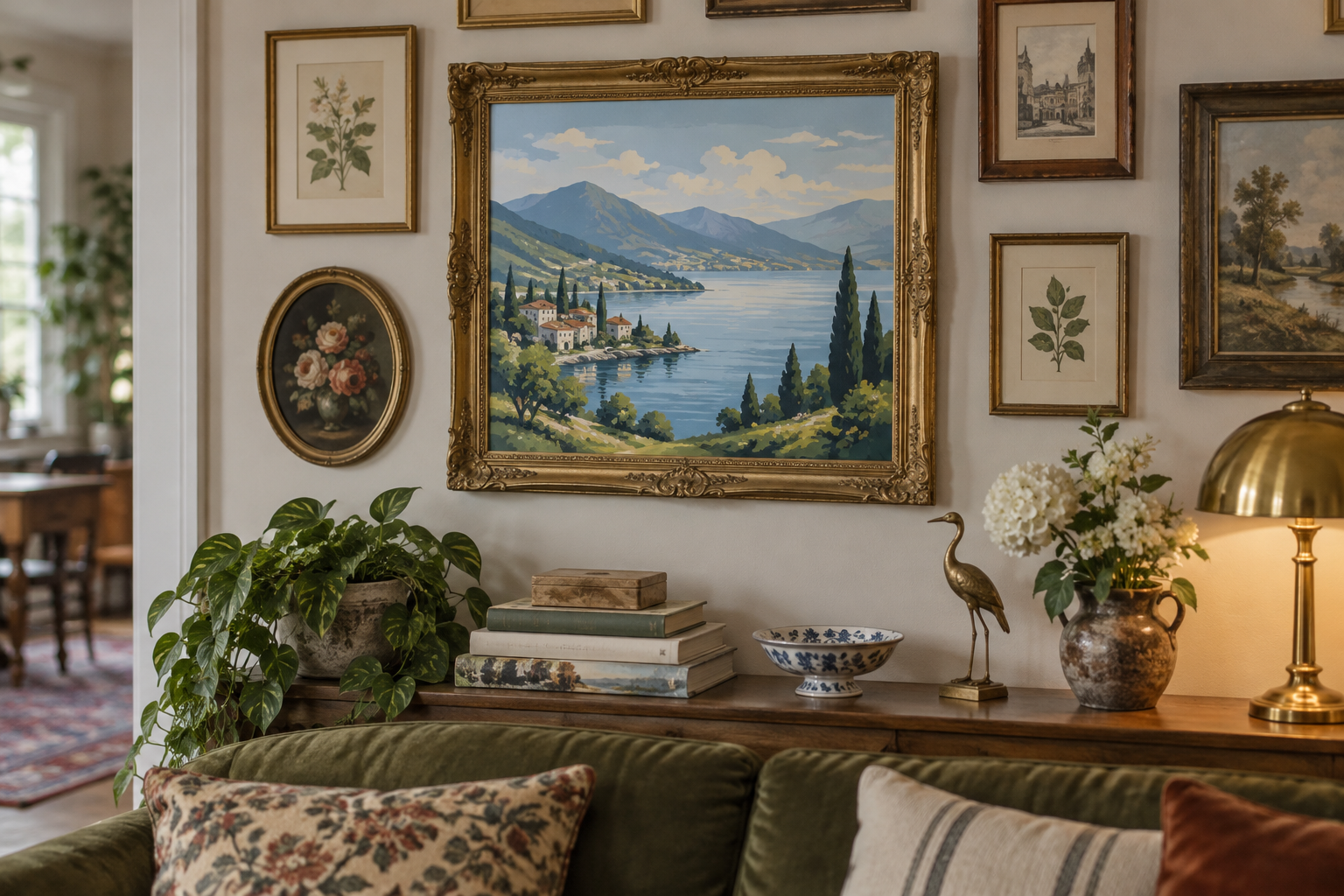
Every thrifter knows the feeling of walking past a gorgeous gilded frame and wondering what on earth you would put in it. Prints add up fast, and original art is a stretch for most budgets. Paint by numbers is one of the easiest ways to fill that frame with something you actually made, and it works even if you have never held a paintbrush since middle school.
If you would rather start from a ready-made design than hunt for one, Davincified keeps one of the largest ranges of paint by numbers canvases online, so there is usually something that suits whatever wall (and frame) you have in mind. Here is how to pick a first project, get through it without frustration, and give it the thrifted-frame treatment.
Why paint by numbers is a good first hobby for thrifters
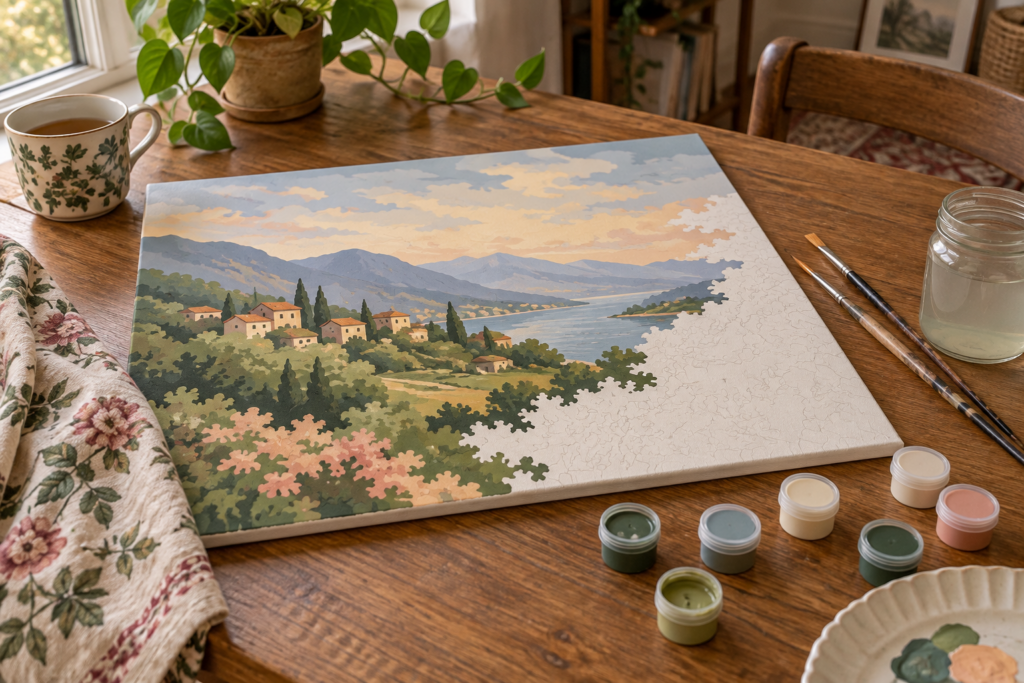
The design is already drawn for you. Each shape on the canvas carries a number, each number matches a paint color, and your only job is to fill the shapes in. There is no sketching, no color mixing and no blank-page panic.
It is also a forgiving hobby for anyone watching their spending. One kit holds everything you need to finish a piece, and a finished canvas is real wall art, the kind that would cost far more if you bought a painting of similar size. If you already love flipping through the art section at Goodwill, you will probably love this too.
How to pick your first kit
Three things decide whether a first kit feels relaxing or tedious.
Size. Start small or medium. A big canvas looks impressive, but it can take weeks, and beginners tend to lose steam halfway through a very large piece.
Detail level. Look for designs with larger shapes and fewer tiny sections. Crowded areas full of minuscule numbers are the part that tests your patience, so save those for kit number two.
Subject. Choose something you would genuinely hang up. Landscapes, florals and flowers are friendly to beginners because soft edges hide small mistakes. Think about the room it is headed for, too. A calm lake scene works beautifully above a sofa or a console table.
What you need before you start
A good kit includes the canvas, numbered paints and brushes. Beyond that, gather a few simple things:
- A jar of water and a roll of paper towels
- A bright spot near a window, or a daylight lamp
- A flat surface you do not mind getting a little messy
- A thrifted muffin tin or small dish to hold the paint pots while you work
Lay everything out before you start and keep the lids on any paint you are not using. The paint dries faster than you would expect.
Painting tips for a first-timer
After a few canvases, you notice the same habits make the difference:
- Work in one area at a time. Finish a color family, such as all the sky shapes, before moving on. It keeps your brush clean and your place easy to find.
- Go top to bottom. Painting from the top down (or from the side opposite your painting hand) keeps your sleeve from smudging wet sections.
- Use a small brush for small shapes. The tip matters more than the brush size you think you need.
- Do not overthink the edges. A tiny bit of overlap disappears once the neighboring color goes on.
- Check the paint quality. Davincified’s paint is high opacity, so a dark number underneath is covered in a single coat instead of needing three passes, which is a real time saver on dark and light shapes alike.
- Step back often. Paint by numbers looks like a puzzle up close and like a painting from across the room. A look from a few feet away will tell you how it is going.
Frame it with a thrifted find
This is where thrifters have the advantage. A finished canvas looks very different in a frame, and secondhand frames are some of the best bargains in any store.
Before you shop, measure your canvas. Depending on the kit, it may arrive rolled or already stretched, so check which you have before you go looking for a frame. A stretched canvas can sit in a frame that matches its size, while a rolled one will need to be stretched or mounted first.
When you are browsing, look past the artwork inside. Ornate gold frames, dark wood frames and even slightly scuffed ones can look wonderful with a little cleaning. A coat of paint or a rub of wax can refresh a tired finish, and you can often swap out the old art for your own. Landscapes in particular look at home in traditional, decorative frames.
Hang it like a collection
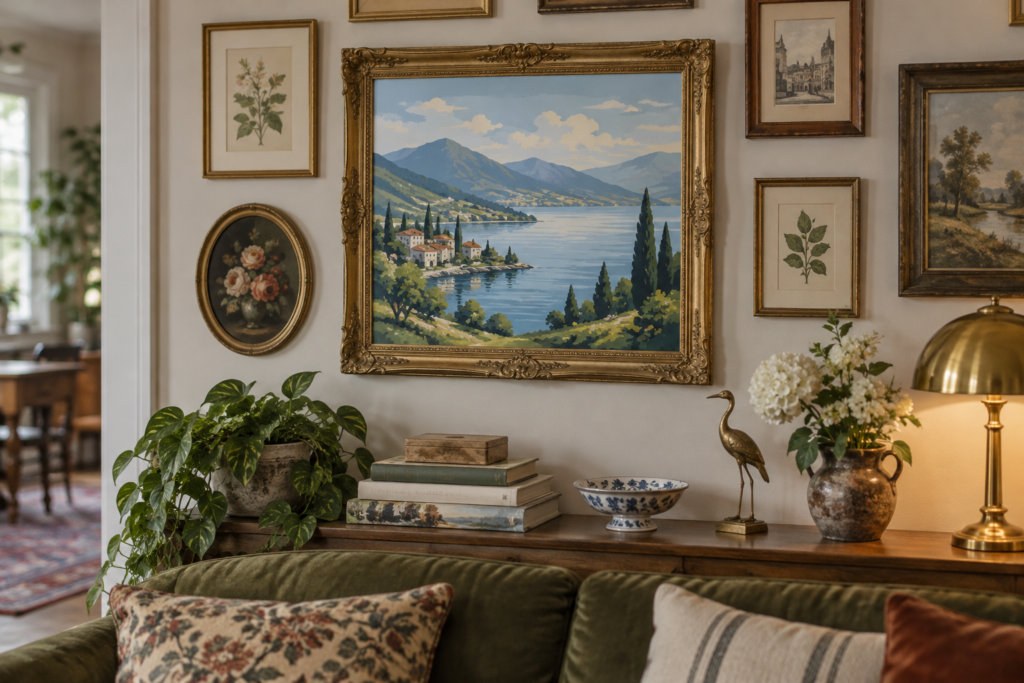
One framed canvas is nice, but a mix is better. Pair your finished piece with a few other thrifted frames, such as botanical prints, small oval portraits or vintage landscapes, to build a gallery wall that feels collected rather than bought all at once.
Keep the frames different but the colors related. If your paint by numbers canvas leans blue and green, pull in prints with similar tones so the wall feels intentional. Add a lamp, a stack of thrifted coffee table books and a plant, and the whole corner comes together.
Start your first one this weekend
You do not need talent or a studio to make art for your walls, only a kit, a free afternoon and a frame waiting for its moment. Pick a small design, put on a podcast and see how relaxing it is to fill in one shape at a time.
Which thrifted frame in your house is waiting for something to go in it?


